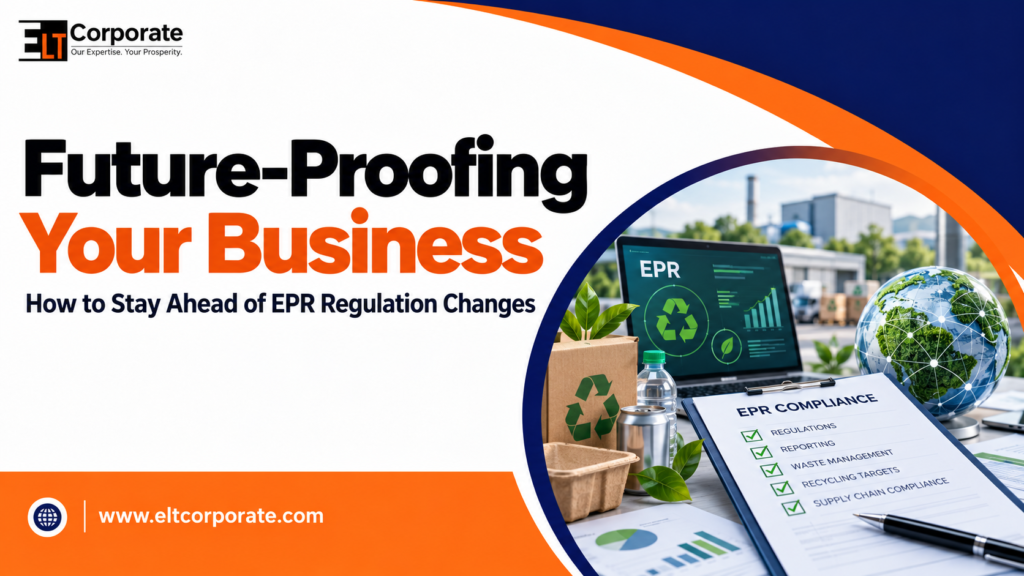
Environmental compliance is no longer something businesses can address only when a licence needs renewal or a regulatory notice arrives. With Extended Producer Responsibility becoming an increasingly important part of India’s waste-management framework, companies must continuously monitor EPR Regulation Changes and adapt their operations accordingly.
Extended Producer Responsibility, commonly known as EPR, places responsibility on producers, importers, brand owners, and other specified entities for managing products or waste after they reach the end of their useful life. Depending on the applicable waste-management rules, businesses may have obligations relating to registration, recycling targets, use of recycled material, procurement of EPR certificates, filing of returns, and maintenance of records.
India’s EPR framework has expanded across areas such as plastic packaging, electronic waste, batteries, waste tyres, used oil, and, more recently, scrap of certain non-ferrous metals. The regulatory landscape therefore continues to evolve.
For businesses, keeping track of EPR Regulation Changes is not merely a compliance exercise. It is an important part of risk management, supply chain planning, and long-term business strategy.
What Are EPR Regulation Changes?
EPR Regulation Changes refer to amendments, new rules, revised compliance targets, procedural requirements, and regulatory directions relating to Extended Producer Responsibility.
An EPR framework generally requires an obligated entity to take responsibility for a specified quantity of waste associated with products or packaging introduced into the market.
However, EPR regulation changes are not static. Regulatory authorities may periodically revise:
– registration requirements;
– recycling or recovery targets;
– recycled-content obligations;
– categories of covered products;
– reporting requirements;
– timelines for filing returns;
– EPR certificate mechanisms;
– obligations of recyclers and waste processors;
– online portal procedures; and
– consequences for non-compliance.
For example, India’s e-waste framework provides for EPR certificates generated through registered recyclers and requires producers to fulfill their obligations through the prescribed EPR mechanism.
This is why businesses should treat EPR Regulation Changes compliance as a function rather than a one-time registration activity.
Why EPR Regulation Changes Matter for Businesses
Ignoring EPR Regulation Changes can affect much more than a company’s environmental compliance status.
When obligations change, a business may suddenly need to revise its annual targets, collect additional data, procure certificates, modify packaging, engage registered recyclers, or update information filed on government portals.
Failure to do so can create regulatory and commercial difficulties.
Businesses may face increased compliance costs, environmental compensation, or other action under the applicable rules. Non-compliance can also cause complications when dealing with large customers, investors, importers, marketplaces, or organizations that require proof of environmental compliance from their suppliers.
Keeping track of EPR Regulation Changes therefore protects both legal compliance and business continuity.
EPR Regulation Changes Are Expanding to More Waste Streams
One of the most important developments in India’s environmental regulatory framework is the gradual expansion of EPR to additional product and waste categories.
Existing EPR-related frameworks include areas such as:
Plastic packaging: Producers, importers, and brand owners covered under the Plastic Waste Management framework may have registration and EPR obligations relating to plastic packaging waste. Requirements can include recycling obligations and minimum use of recycled plastic depending upon the applicable category and year.
For example, regulations prescribe progressively increasing minimum recycling levels for certain categories of plastic packaging.
E-waste: The E-Waste (Management) Rules, 2022 introduced a certificate-based EPR mechanism under which producers meet applicable responsibilities through EPR certificates generated by registered recyclers. The framework has subsequently undergone amendments.
Battery waste: The Battery Waste Management Rules, 2022, establish EPR-related responsibilities for producers of batteries. The framework has also been amended several times, including during 2023, 2024, and 2025.
Waste tyres: EPR requirements have also been introduced for waste tyres under the Hazardous and Other Wastes regulatory framework.
Used oil: EPR provisions for used oil were introduced through amendments to the Hazardous and Other Wastes (Management and Transboundary Movement) Rules. The relevant provisions came into force from April 1, 2024.
Scrap of non-ferrous metals: India has further expanded its EPR approach to scrap of specified non-ferrous metals. The relevant 2025 rules are scheduled to come into force from April 1, 2026.
The direction is clear: businesses should expect Extended Producer Responsibility to continue becoming an important component of environmental regulation.
How to Monitor EPR Regulation Changes Effectively
The first step towards future-proofing your organization is establishing a system for continuously monitoring EPR regulation changes.
Businesses should regularly review notifications issued by the Ministry of Environment, Forest and Climate Change, the Central Pollution Control Board, and other competent authorities.
Do not rely exclusively on old compliance checklists because a requirement that applied during the previous financial year may have been amended.
Your compliance team should monitor:
official Gazette notifications, amendments to waste-management rules, CPCB guidelines, portal updates, clarifications, applicable deadlines, and changes in EPR targets.
It is also useful to maintain an internal EPR Regulation Changes tracker that records each change, its effective date, the business units affected, and the action required.
Conduct Regular Reviews for EPR Regulation Changes
A business should periodically determine whether its products, packaging, or operations have become subject to new EPR obligations.
Review questions should include:
- Does the company manufacture or import products covered by an EPR framework?
- Does the organization qualify as a producer, importer, brand owner, or another regulated entity?
- Have new products been introduced since the previous compliance assessment?
- Has the quantity of products or packaging placed in the market increased?
- Are the company’s recyclers or waste processors properly registered?
- Have annual or periodic returns been filed within the applicable timelines?
- Are there new recycling or recycled-content targets?
Regular reviews make it easier to identify potential EPR regulations. Changes gaps before they turn into compliance problems.
Build Reliable Data Systems for EPR Regulation Changes
Accurate data is central to EPR compliance.
Many EPR obligations are calculated using quantities of products, batteries, packaging materials, electronic equipment, oil or other regulated materials placed on the market.
Businesses should therefore build systems. EPR Regulation Changes capable of tracking relevant information from procurement through sales.
Depending on the applicable EPR framework, useful records may include:
Purchase quantities, import data, sales volumes, packaging material quantities, product categories, invoices, recycler documentation, recycling quantities, and EPR certificate transactions.
The information maintained by procurement, finance, production, logistics and regulatory teams should also be reconciled periodically.
If inaccurate information is submitted to EPR Regulation Changes on an EPR portal, correcting the compliance position later may become difficult.
Prepare Your Supply Chain for EPR Regulation Changes
Businesses sometimes assume that EPR compliance belongs entirely to the environmental or legal department.
In reality, EPR regulation changes can affect procurement, manufacturing, packaging, logistics, finance, and vendor management.
For example, increasing recycled-content requirements may require the procurement team to identify suitable raw-material suppliers.
Higher recycling obligations may require businesses to secure arrangements with authorized recyclers.
Changes in product categorization may require updated sales data.
Companies should therefore integrate EPR compliance into their supply-chain strategy instead of treating it as an isolated regulatory task.
Long-term agreements with reliable registered recyclers and processors may also help reduce last-minute compliance risks.
Maintain an EPR Regulation Changes Compliance Calendar
Missing a deadline can create unnecessary exposure even when a company otherwise has adequate recycling arrangements.
A compliance calendar should therefore include applicable:
registration renewal dates, return filing deadlines, target fulfillment periods, certificate requirements, data-verification deadlines, and internal review dates.
Businesses should set internal EPR Regulation Changes deadlines well before statutory deadlines.
For example, if an annual filing is due at the end of a particular month, internal data reconciliation should ideally be completed several weeks earlier.
This gives the business time to identify discrepancies and resolve them before filing.
EPR Regulation Changes in Product and Packaging Decisions
The best time to address EPR Regulation Changes is often before a product enters the market.
Companies developing a new product should analyze its likely environmental obligations during the design and packaging stage.
Questions to consider include:
- Can the packaging be reduced?
- Can recyclable materials replace difficult-to-recycle materials?
- Can recycled content be incorporated?
- Can different packaging components be separated easily?
- Will the product fall within an existing EPR category?
Designing products with a circular economy EPR Regulation Changes principles in mind can make future compliance easier and may reduce long-term waste-management costs.
Budget for Future EPR Regulation Changes
EPR obligations can have direct financial consequences.
Businesses may incur expenses relating to registration, recycling arrangements, collection systems, EPR certificate procurement, consultants, compliance staff, data systems, recycled materials, and audits.
Waiting until the end of the EPR Regulation changes the financial year to estimate these expenses can create budget pressure.
Companies should forecast EPR costs as part of their annual business planning.
Management should also consider different compliance scenarios. If recycling targets increase or certificate prices change, what would be the impact on the company’s operating costs under the EPR Regulation changes?
Planning for such situations improves financial resilience.
Train Employees About EPR Regulation Changes
Compliance failures frequently occur because EPR regulation changes and regulatory knowledge remain limited to one individual or department.
Employees involved in purchasing, imports, production, packaging, finance, and sales should understand the basic EPR responsibilities relevant to their work.
For instance, procurement teams should know why purchasing from a compliant or registered recycler matters.
Finance teams should understand EPR Regulation Changes and why invoices and quantity data must be retained accurately.
Product teams should know when the introduction of a new product may create an additional EPR obligation.
Periodic training ensures that EPR Regulation Changes are understood across the organization rather than by only the compliance team.
Conduct Internal Audits After Major EPR Regulation Changes
Whenever significant EPR Regulation Changes are introduced, businesses should conduct an internal compliance review.
An EPR audit can examine whether:
- Registration information is correct.
- Product categories are properly classified;
- Reported quantities match financial and sales records
- EPR targets have been correctly calculated;
- Required certificates have been obtained;
- Recycler documentation is valid.
- returns have been filed; and
- Records are available to support information submitted to authorities.
A proactive audit can identify discrepancies before they are detected during regulatory scrutiny.
Do Not Wait for EPR Regulation Changes to Become a Problem
One of the biggest EPR regulation change mistakes businesses make is taking action only after receiving a notice, approaching a filing deadline, or discovering that an EPR target has not been achieved.
Reactive compliance is generally more expensive and stressful.
A better strategy is to maintain an EPR Regulation Changes ongoing compliance program that includes regulatory monitoring, quarterly data review, recycler verification, documentation checks, and management reporting.
This allows businesses to respond quickly whenever EPR Regulation Changes are announced.
Conclusion
EPR should not be viewed only as a regulatory burden.
Businesses that respond early to EPR Regulation Changes can strengthen their environmental credentials and improve their position in increasingly sustainability-focused supply chains.
Companies that redesign packaging, increase recycled content, improve product recyclability, and maintain transparent waste-management records may gain advantages from EPR regulation changes when dealing with large corporate customers or international businesses with environmental procurement standards.
EPR can therefore become part of a broader environmental, social, and governance strategy.
Frequently Asked Questions
Q.1 What are EPR regulation changes?
EPR Regulation Changes are amendments or new regulatory requirements affecting Extended Producer Responsibility (EPR) reporting and EPR certificates.
Q.2 Who should monitor EPR regulation changes?
Producers and importers covered under applicable waste-management regulations should regularly monitor EPR Regulation Changes relevant to their products and activities.
Q.3 Which sectors are affected by EPR Regulation Changes in India?
Depending on the applicable rules, EPR frameworks cover areas including plastic packaging, electronic equipment, and batteries.
Q.4 How frequently should businesses review EPR regulation changes?
Businesses should monitor regulatory developments throughout the year and conduct formal compliance reviews of supply chains.