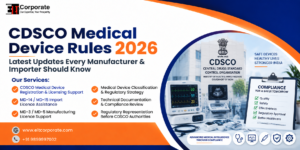
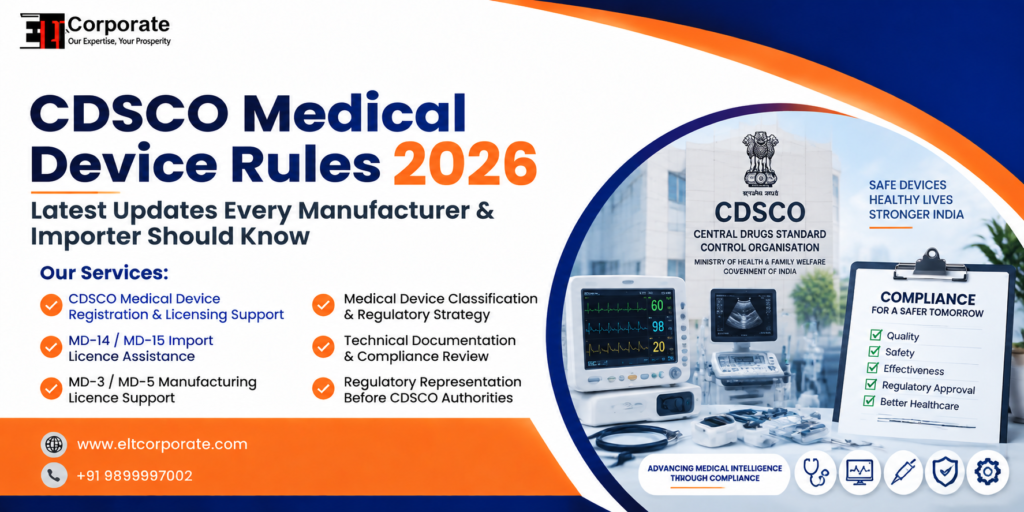
India’s medical device sector is rapidly expanding due to increasing healthcare demand, technological advancements, and growing investment from global manufacturers. With this growth, regulatory compliance has become a critical requirement for medical device manufacturers, importers, and foreign companies entering the Indian market.
The Central Drugs Standard Control Organisation (CDSCO) regulates medical devices in India under the Medical Devices Rules, 2017 (MDR 2017). The regulatory framework continues to evolve with greater focus on product classification, quality management systems, clinical evaluation, post-market surveillance, and patient safety.
In 2026, medical device businesses must understand the latest CDSCO compliance expectations to avoid regulatory delays, import restrictions, and licensing issues.
This guide explains the important CDSCO Medical Device Rules 2026 updates, their impact, and the compliance roadmap for manufacturers and importers.
CDSCO Medical Device Rules 2026: At a Glance
| Particular | Details |
|---|---|
| Regulatory Authority | CDSCO (Central Drugs Standard Control Organisation) |
| Applicable Regulation | Medical Devices Rules, 2017 |
| Regulatory Framework | Drugs & Cosmetics Act, 1940 |
| Import Licence | MD-14 Application & MD-15 Licence |
| Manufacturing Licence | MD-3 / MD-5 |
| Registration Portal | CDSCO Online Portal |
| Classification | Class A, B, C & D |
| Quality Requirement | ISO 13485 Based QMS |
Major CDSCO Medical Device Regulatory Updates in 2026
1. Increased Focus on Medical Device Classification
One of the most important areas under CDSCO regulation is correct classification of medical devices.
Medical devices are classified into four categories:
| Class | Risk Level |
|---|---|
| Class A | Low Risk |
| Class B | Low Moderate Risk |
| Class C | Moderate High Risk |
| Class D | High Risk |
Manufacturers must evaluate:
- Intended use
- Duration of contact with body
- Invasiveness
- Active/passive nature
- Risk associated with device failure
Incorrect classification can result in rejection of applications or regulatory queries.
2. Stricter Compliance for Imported Medical Devices
Foreign manufacturers planning to enter India must comply with CDSCO import requirements.
The importer must obtain:
MD-14 Application
Application for grant of import licence.
MD-15 Licence
Import licence issued by CDSCO.
Foreign manufacturers are required to appoint an:
Indian Authorized Agent (IAA)
The Indian Authorized Agent acts as a regulatory representative between CDSCO and the overseas manufacturer.
3. Quality Management System (ISO 13485) Compliance
Quality management has become a key regulatory requirement for medical device companies.
Manufacturers should maintain:
- Quality Manual
- Device Master File
- Manufacturing Process Records
- Risk Management File
- Complaint Handling System
- Corrective & Preventive Action (CAPA)
- Post Market Surveillance System
ISO 13485 certification plays an important role in demonstrating manufacturing quality.
4. Focus on Post Market Surveillance (PMS)
CDSCO has increased emphasis on monitoring devices after commercial launch.
Manufacturers must maintain:
- Customer complaints records
- Adverse event reporting
- Field safety corrective actions
- Periodic safety reviews
- Device performance monitoring
Effective PMS helps ensure continued safety and regulatory compliance.
5. Growing Regulatory Attention on Software and AI-Based Medical Devices
With the rapid growth of Artificial Intelligence (AI) in healthcare, CDSCO is focusing more on:
- Software as Medical Device (SaMD)
- AI-based diagnostic tools
- Clinical decision support software
- Digital healthcare solutions
Companies developing AI healthcare products must evaluate:
- Whether the software qualifies as a medical device
- Applicable risk classification
- Clinical evaluation requirements
- Cybersecurity considerations
Compliance Requirements for Medical Device Importers in India
Before importing medical devices, companies should ensure:
1. Product Classification
Determine:
- Device category
- Risk class
- Applicable rules
2. Regulatory Documents
Commonly required documents include:
| Document | Requirement |
|---|---|
| Free Sale Certificate | Country of Origin Approval |
| ISO 13485 Certificate | Quality System |
| Power of Attorney | Foreign Manufacturer Authorization |
| Device Master File | Technical Details |
| Plant Master File | Manufacturing Facility Details |
| CE/FDA Documents (if available) | Regulatory Support |
Common Reasons for CDSCO Application Delays
1. Incorrect Device Classification
Many applications face queries due to improper classification.
2. Incomplete Technical Documentation
Missing:
- Device specifications
- Testing reports
- Clinical evidence
- Manufacturing details
can delay approval.
3. Incorrect Labelling
Labels must comply with:
- MDR 2017 requirements
- Product information requirements
- Importer details
Step-by-Step CDSCO Approval Process for Medical Devices
Step 1: Identify Device Classification
Determine whether the device falls under Class A, B, C, or D.
Step 2: Prepare Regulatory Documentation
Collect technical and legal documents.
Step 3: Submit Application Through CDSCO Portal
Submit applicable forms:
- MD-14 for Import Licence
- MD-3 for Manufacturing Licence
Step 4: Regulatory Review
CDSCO evaluates:
- Safety
- Performance
- Technical documentation
Step 5: Licence Grant
After successful review, CDSCO issues the applicable licence.
Impact of CDSCO 2026 Compliance on Businesses
For Indian Manufacturers
Benefits:
✔ Better market acceptance
✔ Improved product quality
✔ Export readiness
✔ Increased customer confidence
For Foreign Manufacturers
Benefits:
✔ Access to Indian healthcare market
✔ Regulatory credibility
✔ Long-term business expansion opportunities
How ELT Corporate Helps Medical Device Companies
ELT Corporate provides end-to-end regulatory assistance for:
✔ CDSCO Medical Device Registration
✔ MD-14 Import Licence
✔ MD-15 Import Compliance
✔ MD-3/MD-5 Manufacturing Licence
✔ Device Classification Support
✔ Technical Documentation Review
✔ Regulatory Representation
Our regulatory experts help manufacturers and importers achieve faster and smoother approvals with complete compliance support.
Frequently Asked Questions (FAQs)
1. Is CDSCO registration mandatory for medical devices in India?
Yes, medical devices notified under MDR 2017 require approval or licensing from CDSCO before manufacturing or importing in India.
2. What is MD-15 licence?
MD-15 is the import licence issued by CDSCO for importing medical devices into India.
3. Does every foreign manufacturer need an Indian Authorized Agent?
Yes, foreign manufacturers must appoint an Indian Authorized Agent for regulatory communication with CDSCO.
4. Is ISO 13485 mandatory for medical device manufacturers?
ISO 13485 compliance is an important requirement for demonstrating quality management system compliance.
5. How long does CDSCO medical device approval take?
Approval timelines depend on device classification, document completeness, and CDSCO review process.
Conclusion
The CDSCO Medical Device Rules 2026 framework represents India’s commitment towards ensuring safe, effective, and high-quality healthcare products. Manufacturers and importers must proactively understand regulatory requirements, maintain proper documentation, and implement quality systems to successfully operate in the Indian market.
With increasing regulatory scrutiny, early compliance planning is essential for avoiding delays and ensuring smooth market entry.
Why Choose ELT Corporate?
With expertise in medical device regulations, CDSCO approvals, BIS, Legal Metrology, and healthcare compliance, ELT Corporate supports companies in achieving regulatory approvals with strategic guidance and complete documentation assistance.
Partner with ELT Corporate for reliable medical device regulatory solutions in India.